
Finding the right dental home can shape your health, confidence, comfort, and budget for years. In a fast-growing community like Wentzville, MO, patients have more choices than ever, which is helpful, but it can also make the decision feel overwhelming.
The best dentist for one person is not always the best dentist for another. Your ideal fit depends on your goals, your schedule, your dental history, your insurance, your anxiety level, and whether you need routine cleanings, cosmetic dentistry, emergency care, children’s dentistry, or long-term restorative treatment.
Start With Your Family’s Real Dental Needs
Before comparing offices, make a practical list of what you actually need from a dentist in Wentzville, MO. A young family may prioritize gentle pediatric visits, convenient appointment times, and a welcoming atmosphere. A busy professional may care most about efficient scheduling, early morning availability, and same-day treatment options. Someone with missing teeth, gum disease, dental anxiety, or a history of complex dental work may need a dentist with broader clinical experience and a strong treatment planning process.
Think beyond your next cleaning. A great dental office should be able to support your oral health over time. Ask whether you may need periodontal care, night guards, crowns, dental implants, orthodontics, whitening, or urgent care. If multiple family members will use the same practice, consider whether the office can care for children, teens, adults, and older adults comfortably. Choosing a dentist becomes much easier when you know which services and patient experience details matter most.
It also helps to identify your non-negotiables. These might include a specific insurance network, a location near Highway 70 or Highway 61, a dentist who explains treatment clearly, modern imaging, sedation options, or a team that is especially patient with nervous visitors. When you define your priorities early, you are less likely to choose based only on advertising, a single promotion, or the closest office to your home.
Check Credentials, Licensing, and Professional Standards
Every dentist must meet state licensing requirements, but patients should still take time to verify that an office operates with professionalism and transparency. In Missouri, dentists are licensed and regulated through the state, and patients can review information through the Missouri Dental Board. This is especially useful if you are new to the area or are considering a dentist you do not know through personal referrals.
Credentials are not just letters after a name. They can indicate a commitment to continuing education, advanced training, and ethical standards. Dentistry changes quickly, especially in areas like digital scanning, implant dentistry, cosmetic materials, sleep-related dental appliances, and minimally invasive treatment. A strong dentist continues learning and is comfortable discussing why a specific treatment is recommended, what alternatives exist, and what risks or limitations you should understand.
When reviewing a practice website or calling the office, look for signs of clinical accountability. Does the dentist explain their philosophy of care? Are services described in plain language? Does the office mention preventive dentistry, patient education, and comprehensive exams rather than only promoting cosmetic or urgent procedures? A trustworthy practice will not pressure you into unnecessary treatment. Instead, the team will help you understand your diagnosis and make informed decisions.
Evaluate Experience With Preventive, Restorative, and Emergency Care
The foundation of excellent dentistry is prevention. A quality dentist in Wentzville should emphasize regular exams, professional cleanings, digital X-rays when appropriate, gum health evaluation, oral cancer screening, fluoride recommendations, sealants for children, and home care coaching. Preventive care is not basic or optional. It is the part of dentistry that helps patients avoid pain, infection, tooth loss, and expensive treatment later.
Reliable educational guidance from the CDC highlights the importance of preventive oral health habits, including brushing with fluoride toothpaste, flossing, limiting sugary foods and drinks, and getting routine dental care. A dentist who takes prevention seriously will talk to you about your risk factors, not just polish your teeth and send you home. For example, dry mouth from medication, frequent snacking, acid reflux, tobacco use, diabetes, and orthodontic appliances can all change your cavity or gum disease risk.
Restorative experience matters too. Many patients eventually need fillings, crowns, bridges, root canal treatment, dentures, implant restorations, or replacement of old dental work. Ask how the office approaches treatment planning. Do they show photos or X-rays? Do they explain the difference between monitoring a small issue and treating it immediately? Can they help you phase treatment if several teeth need attention? A thoughtful dentist will balance urgency, longevity, comfort, appearance, and cost.
Emergency care is another key factor. Dental emergencies rarely happen at convenient times. A cracked tooth, swelling, lost crown, severe toothache, or sports injury can disrupt work, school, and sleep. Find out whether the office offers same-day emergency appointments, how after-hours calls are handled, and whether established patients receive priority in urgent situations. Even if you rarely need emergency care, knowing your dental team has a plan can give you peace of mind.
Pay Attention to Communication and Chairside Manner
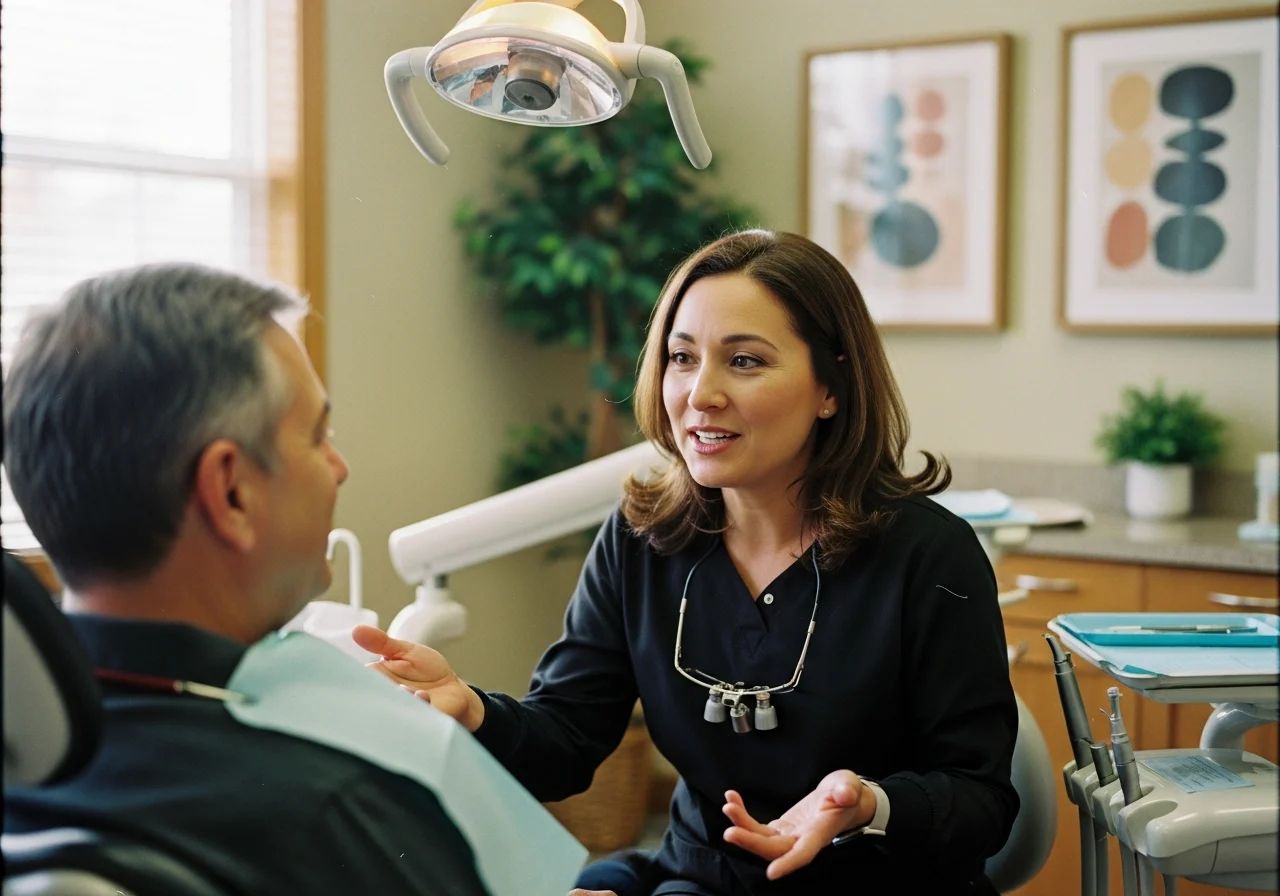
Clinical skill is essential, but communication often determines whether patients stay with a dentist long term. The best dental experiences happen when you feel heard, respected, and informed. During your first call or appointment, notice how the team treats your questions. Are they patient? Do they explain insurance and scheduling clearly? Do they seem rushed or dismissive? A friendly front desk and hygienist can tell you a lot about the culture of the practice.
During the exam, the dentist should be willing to explain findings in language you understand. Good communication includes showing you what they see, describing the cause of the problem, outlining treatment options, and explaining what may happen if you wait. For example, if you have a cracked molar, you should understand whether a crown is recommended to prevent fracture, whether the nerve is involved, and whether any alternatives are reasonable.
Chairside manner is especially important for patients with dental anxiety. Many people avoid dental care because of past negative experiences, fear of pain, embarrassment about their teeth, or sensitivity to sounds and sensations. A compassionate dentist will not shame you. Instead, they will ask what makes you uncomfortable and offer ways to make visits easier. These may include slower explanations, breaks during treatment, topical anesthetic before injections, noise reduction, relaxation techniques, or sedation options when appropriate.
Review Technology, Cleanliness, and Office Systems
Modern dental technology should improve diagnosis, comfort, precision, and efficiency. It should not simply be a marketing buzzword. Helpful tools may include digital X-rays with lower radiation exposure, intraoral cameras that show close-up images of teeth, digital scanners that reduce the need for traditional impressions, 3D imaging for implant planning, and software that helps explain treatment visually. These tools can make it easier for you to understand your mouth and participate in decisions.
Cleanliness and infection control are equally important. A dental office should look organized, sanitary, and well maintained. Treatment rooms should be prepared between patients, instruments should be sterilized properly, and team members should follow appropriate safety protocols. You do not need to inspect every detail, but you should feel confident that the practice takes patient safety seriously. If an office appears chaotic, cluttered, or careless, that may be a warning sign.
Office systems also influence your experience. Consider how easy it is to schedule, confirm, and reschedule appointments. Does the office offer digital forms? Are treatment estimates presented clearly? Can they help you understand insurance benefits without pretending insurance is the same as a clinical recommendation? A well-run practice respects your time and reduces confusion before treatment begins. That matters when you are comparing dentists because convenience is not only about location. It is also about whether the office communicates reliably, bills accurately, and helps you feel prepared.
Compare Costs, Insurance, and Long-Term Value
Price matters, but the cheapest option is not always the best value. Dental treatment should be judged by diagnosis quality, materials, time spent, follow-up care, and how well the result protects your health. A low fee for a crown, filling, or denture may not be a bargain if the work fails early or if the office does not take time to address the cause of the problem.
Ask for written treatment plans that separate urgent needs from elective improvements. If you have insurance, confirm whether the practice is in network, how deductibles work, and what portion is estimated to be your responsibility. If you do not have insurance, ask about membership plans, phased treatment, or financing options.
Look at Reviews With a Critical Eye
Online reviews can be useful, but they should not be your only decision-making tool. Look for patterns rather than focusing on one glowing review or one frustrated comment.
Also ask neighbors, coworkers, school parents, and local community groups for recommendations. Personal referrals are valuable because they often include details that reviews miss, such as how the dentist handles nervous children, whether appointments run on time, and how the office responds when treatment does not go as planned.
Choose a Dental Home, Not Just an Appointment
The best dentist in Wentzville, MO is the one who combines clinical skill, honest communication, practical convenience, and a patient-first approach that fits your life.
When you find a dental office that listens carefully, explains clearly, prevents problems early, and supports you through every stage of care, you gain more than a place for cleanings.
Need help with How to Pick the Best Dentist in Wentzville, MO?