
If one tooth feels fine until you bite down, the pressure may be bringing out a problem you don’t notice at rest. Biting puts force on the tooth, any filling or crown, and the tissue that supports the root. A crack, a filling that meets the opposite tooth too early, or irritation around the root can all make chewing uncomfortable.
Notice whether it hurts when you bite down, when you let go, or after a recent filling or crown. Those details are useful, but several conditions can feel alike. A dental examination can help pinpoint the source and guide treatment.
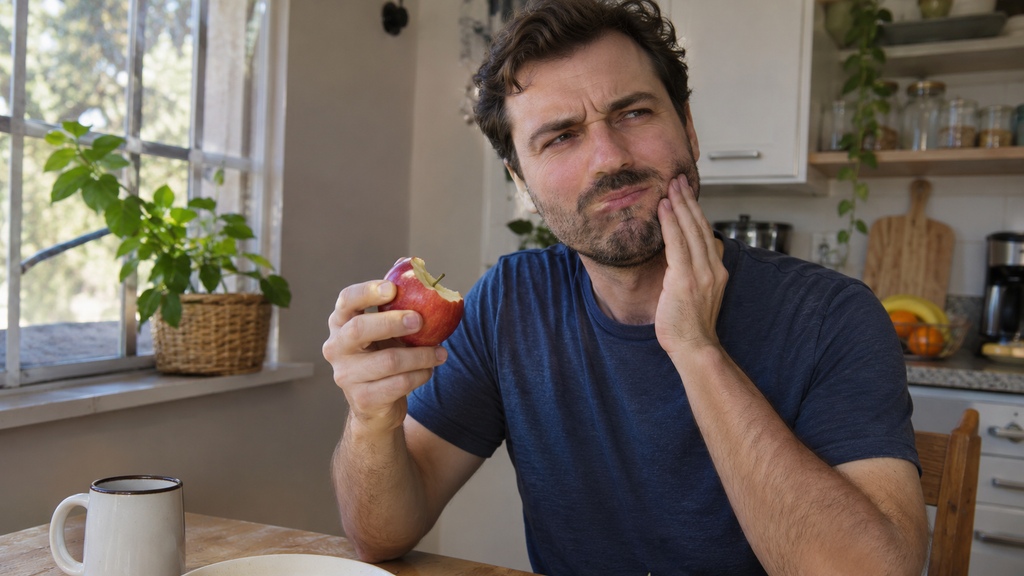
What Does the Timing of the Pain Tell You?
| When it hurts | What to mention to your dentist |
| As you bite down | Say whether it happens with most foods or only with firmer ones. Mention if the tooth also feels sore when your teeth come together without food. |
| As you release your bite | Describe whether there’s a brief, sharp pain or an ache that lingers. Pain on release can be a clue to a crack, but an exam is needed to find the cause. |
| After a new filling or crown | Tell the dentist when the work was done and whether the treated tooth seems to touch first when you close your mouth. |
If a recent filling or crown feels like it touches first, call the dentist who placed it. They can check how your teeth meet and whether the restoration needs an adjustment. You don’t need to bite down hard or keep testing the tooth to describe what you noticed.
When Should You Call the Dentist?
If the same tooth keeps hurting when you bite, arrange an evaluation even if it feels fine between meals. Call promptly for severe or worsening pain, or pain with swelling, fever, or drainage. If a permanent tooth has been knocked out, call a dentist immediately.
Call 911 or seek emergency medical care right away for a severe injury or swelling that makes it hard to breathe or swallow. For urgent dental concerns, call Parkway Family Dental Care at 636-327-6880 so the team can advise you on the next step.
What Can Make One Tooth Hurt Under Pressure?
A crack or a broken part of the tooth
A crack may cause pain when you bite down or when you let go. Some cracked teeth also react to hot or cold. The pain can come and go, which makes it harder to tell which tooth is involved. A tooth can look normal in the mirror even when a crack is present.
A cavity or a problem with a filling or crown
A tooth with decay may react to cold, sweets, or chewing. A worn, loose, or chipped restoration can also make it uncomfortable to bite. If you’ve had fillings or crowns in the area, the dentist can check the dental work and the tooth around it. Mention if food recently started catching in a spot that used to be easy to clean.
Irritation inside the tooth or around its root
The soft tissue inside the tooth contains nerves and blood vessels. Deep decay, a crack, or an injury can affect that tissue. If the area around the root becomes inflamed, it can hurt to chew or tap on the tooth. Tell the dentist if the tooth also aches without pressure or stays sensitive after a hot or cold drink.
Pressure from the bite or irritation around the gum
Clenching or grinding can put extra force on a tooth and the tissue around it. Food trapped between teeth or a problem with the gum can also make the area feel sore when you chew. If you can’t tell whether the pain comes from the tooth or the gum next to it, describe the general area. You don’t have to pinpoint it yourself.
What Does the Dentist Check?
The dentist may look at the tooth, the surrounding gums, and any existing filling or crown. They can check how the upper and lower teeth meet or ask you to bite gently on a tool that tests different parts of the tooth. Depending on your symptoms, they may also compare how nearby teeth respond to cold or gentle tapping.
X-rays can help show decay or changes in the bone around a root. A small crack may be hard to see on an X-ray, so the dentist uses the images along with what you report and what the exam shows. If the cause isn’t clear at first, ask what other checks or follow-up the dentist recommends.
Treatment depends on those findings. A filling that meets the bite too early may need an adjustment. A damaged filling or crown may need repair or replacement. If the tissue inside a tooth is infected or can’t heal and the tooth can be restored, root canal treatment may be an option. Pain when biting alone can’t tell you which treatment you’ll need.
What Should You Tell the Dental Team?
A short description can be more useful than trying to name the cause. For example: “It’s on the upper right. It started yesterday while eating, and the sharp pain comes when I let go.” If the pain is hard to place, say that. Tell the team if you recently had dental work, bit down on something hard, or noticed that the way your teeth meet has changed.
Mention any other symptoms, including pain that wakes you, sensitivity that lingers, or swelling. If you only remember when it started and what you were doing, that’s enough to begin the conversation.
What Can You Do Before Your Appointment?
Choose softer foods and chew on the other side if you can. Avoid biting on ice or hard foods to see whether the tooth still hurts. Keep brushing gently. If you can see food caught between teeth, try to remove it gently with floss. Don’t use a sharp object or force the floss into a sore area.
If you’re considering a nonprescription pain reliever, follow the label and ask a pharmacist or healthcare professional whether it’s safe for you. Don’t place aspirin directly on your tooth or gum. Even if avoiding pressure helps the pain settle, keep your appointment so the dentist can check why it started.
Get Your Bite Checked in Wentzville
If one tooth keeps hurting when you chew or bite down, schedule a dental evaluation with Parkway Family Dental Care in Wentzville, Missouri. Tell the team when